On this page
 AI Summary
Modern enterprises do not lack communication channels.
They struggle with visibility and retention.
Critical messages are sent but not always seen often enough or widely enough to drive awareness or behaviour change. The employee
screensaver,
reimagined for the modern workplace, turns idle screens into high-visibility messaging touchpoints, embedding
communication into the daily workflow across frontline, hybrid, and office-based teams.
Grounded in snackable learning and spaced repetition, Vibe’s screensaver for internal communications reinforces key priorities through small, repeated visual cues over time. Real-world deployments, including the NHS and Transgrid, show how an enterprise employee screensaver strengthens awareness, improves alignment, and bridges the gap between publishing a message and ensuring it is remembered.
 Listen to the Podcast Episode:

Enterprise communication does not struggle because organisations lack content. It struggles because critical messages are not seen often enough to be remembered, and not seen widely enough to reach everyone.
Email inboxes are overloaded. Intranets require intention. Collaboration tools generate constant noise. For healthcare systems, banks, utilities, and large enterprises with geographically dispersed teams, the gap between publishing a message and ensuring it is truly absorbed continues to widen.
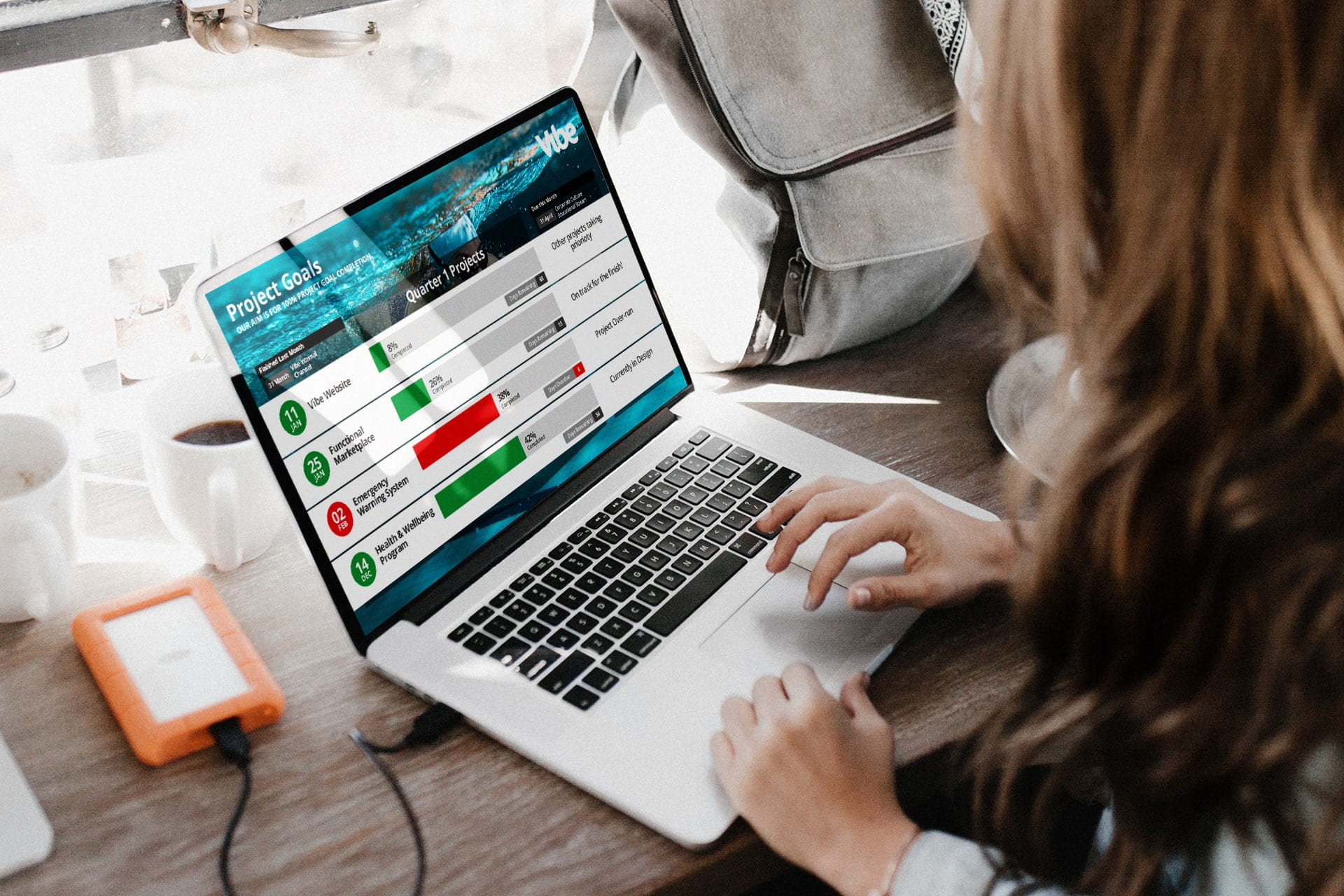
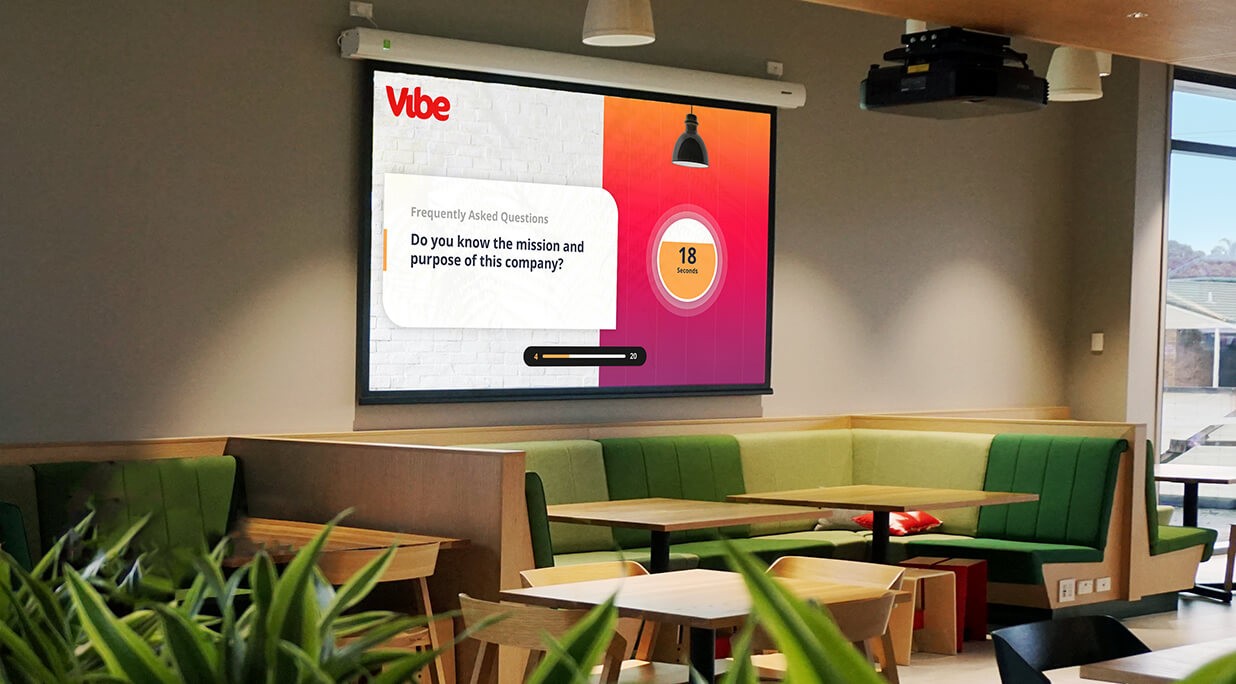
This is where the employee screensaver, reimagined for the modern workplace, comes into its own as a strategic communication channel. No longer an IT-managed slideshow of static images on repeat, it becomes a dynamic, centrally controlled messaging platform. Idle screens are transformed into high-visibility touchpoints that reinforce messages daily and ensure they reach the entire workforce.
From Invisible Messages to Daily Visibility

Transgrid, which builds and maintains the largest electricity network in Australia, faced a challenge familiar to many large organisations. With a geographically dispersed workforce, including contractors and frontline teams across major sites, they found critical updates were not reaching everyone. Traditional channels such as email and the intranet were losing visibility.
Rather than adding more emails, Transgrid changed the surface where communication appeared.
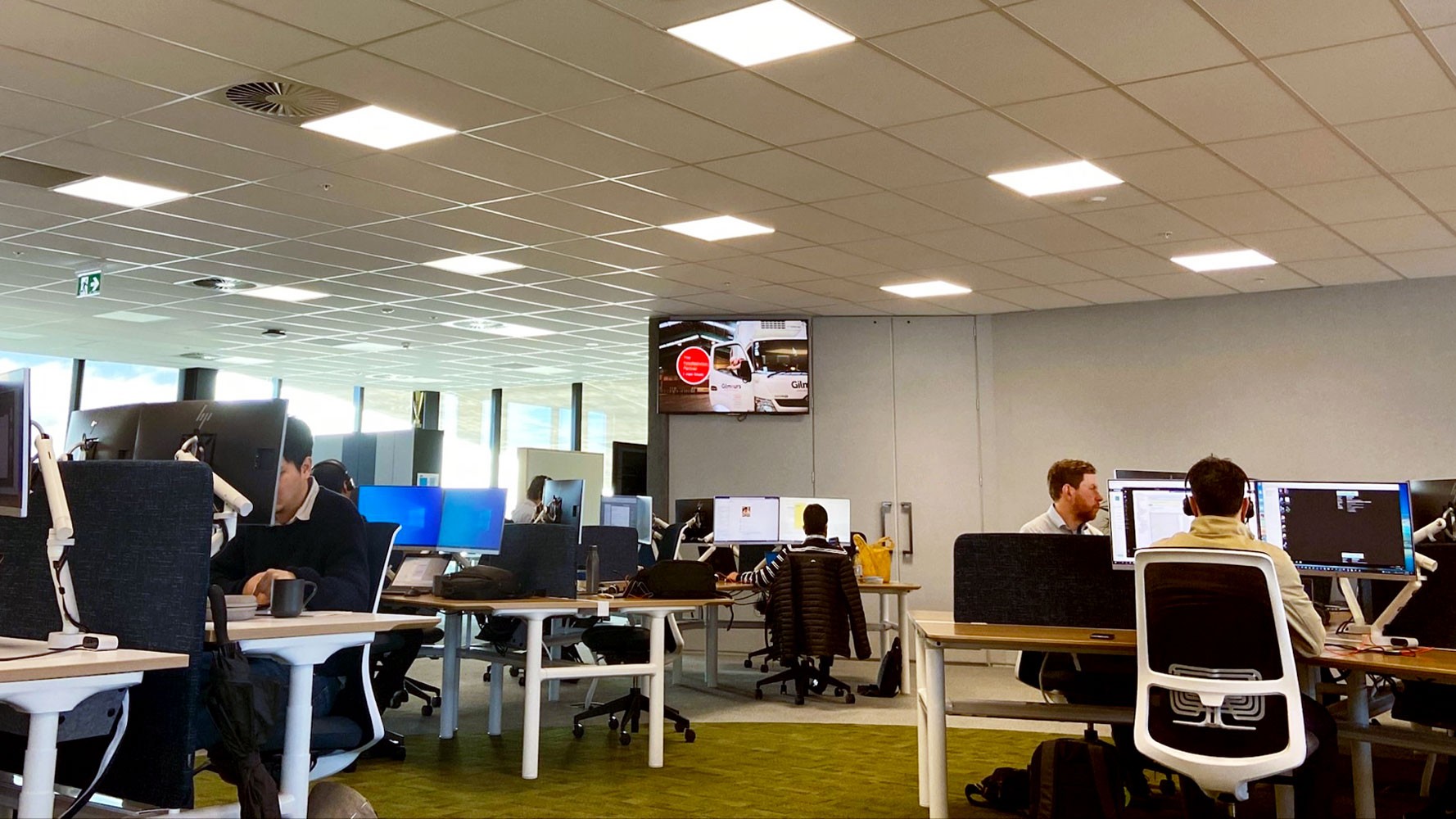
By deploying Vibe’s Screensaver channel to 2,500 desktops and 40 digital signage displays across shared spaces, they achieved instant, organisation-wide visibility. Communications became embedded into the daily workflow. Instead of competing for attention, messages appeared naturally during screen idle moments and in communal areas.
The result was consistent reach, stronger alignment, and improved employee awareness.
That is the difference an enterprise screensaver channel can make. It moves communication from optional to unavoidable, in the best possible way.
Why the Enterprise Employee Screensaver Works
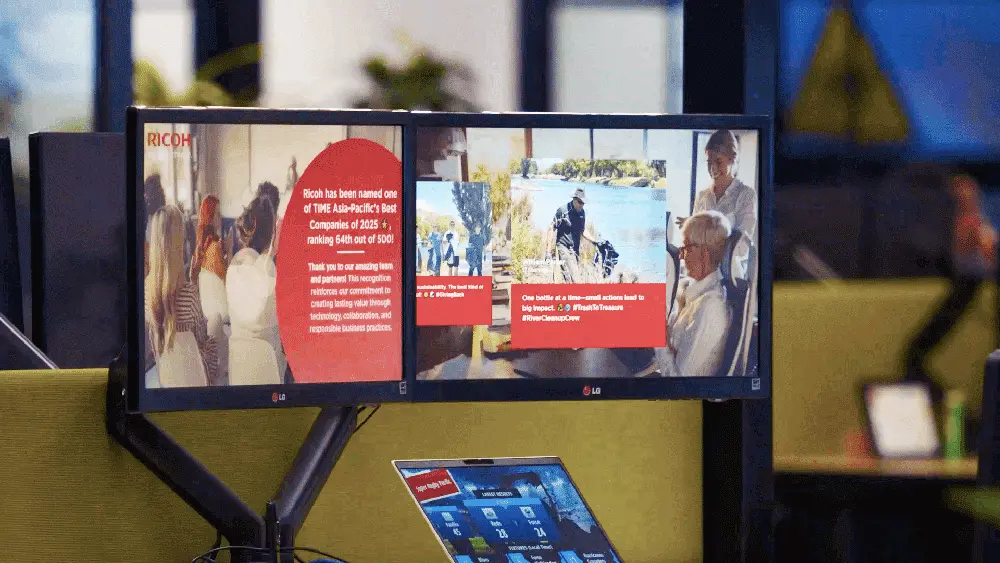
An employee screensaver transforms idle screen time into daily messaging opportunities. It captures attention at natural pauses without disrupting productivity.
More importantly, it enables frequency.
Modern research into learning and behaviour change consistently shows that repetition spaced over time is what moves information from short-term awareness into long-term memory. This science-backed technique, known as spaced repetition, underpins Vibe’s snackable learning strategy.
Instead of relying on a single training session or policy launch, key messages are revisited in small, visual, bite-sized formats across weeks and months. A well-designed screensaver messaging playlist rotates content intelligently so employees may see the same theme multiple times without fatigue.
The screensaver becomes reinforcement, not interruption.
The NHS: Reinforcing Communication at Scale
For healthcare organisations such as the NHS, the stakes are even higher.
The Central and North West London NHS Foundation Trust operates in high-pressure environments where staff do not have time to browse intranet pages between patient interactions. Important updates relating to safety, wellbeing initiatives, digital transformation, and compliance must reach clinical and non-clinical staff alike.
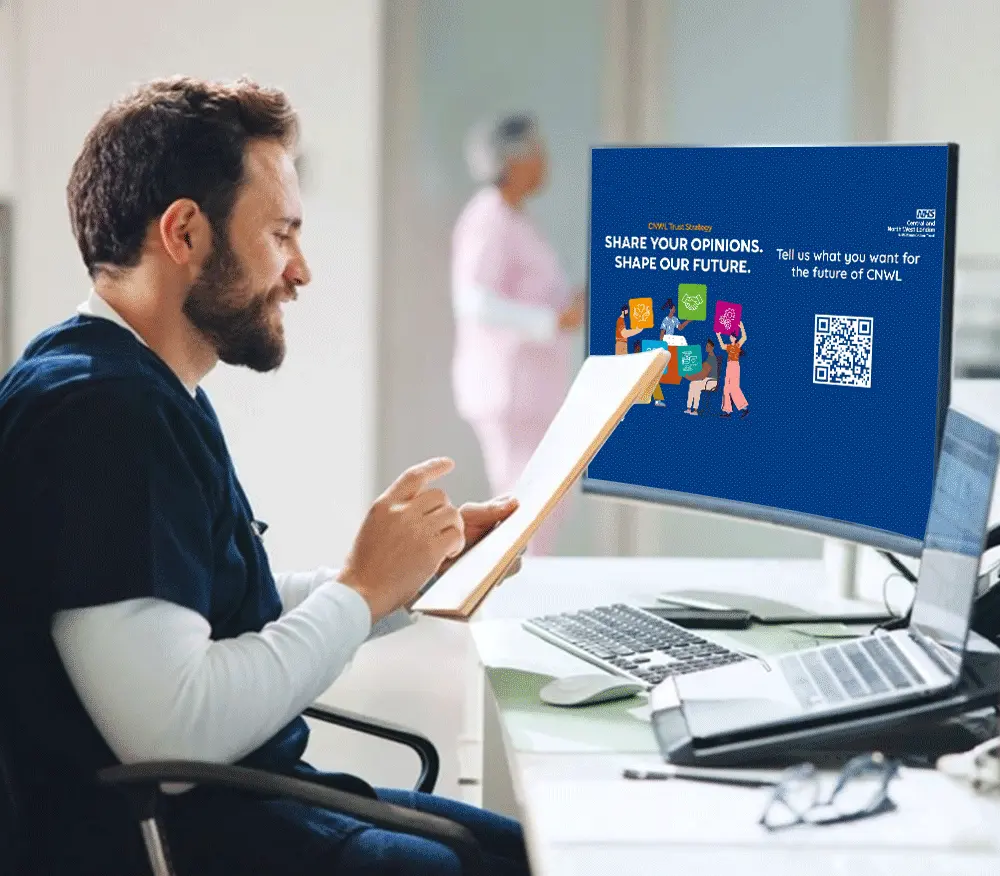
By deploying a company screensaver solution across NHS environments, workplace communication shifted from passive publishing to active reinforcement. Instead of hoping staff would log in and search for updates, messages appeared automatically when devices became idle.
The screensaver channel supported consistent reinforcement of key campaigns, awareness initiatives, and organisational priorities. Over time, this steady repetition will strengthened message recall and improved alignment across departments.
In environments where attention is fragmented and time is scarce, an enterprise screensaver ensures communication meets staff where they already are.
Bridging the Gap Between LMS and Real-World Behaviour
Most enterprises invest heavily in compliance training and LMS platforms. Completion rates are tracked. Certificates are issued.
But completion does not guarantee behavioural change.
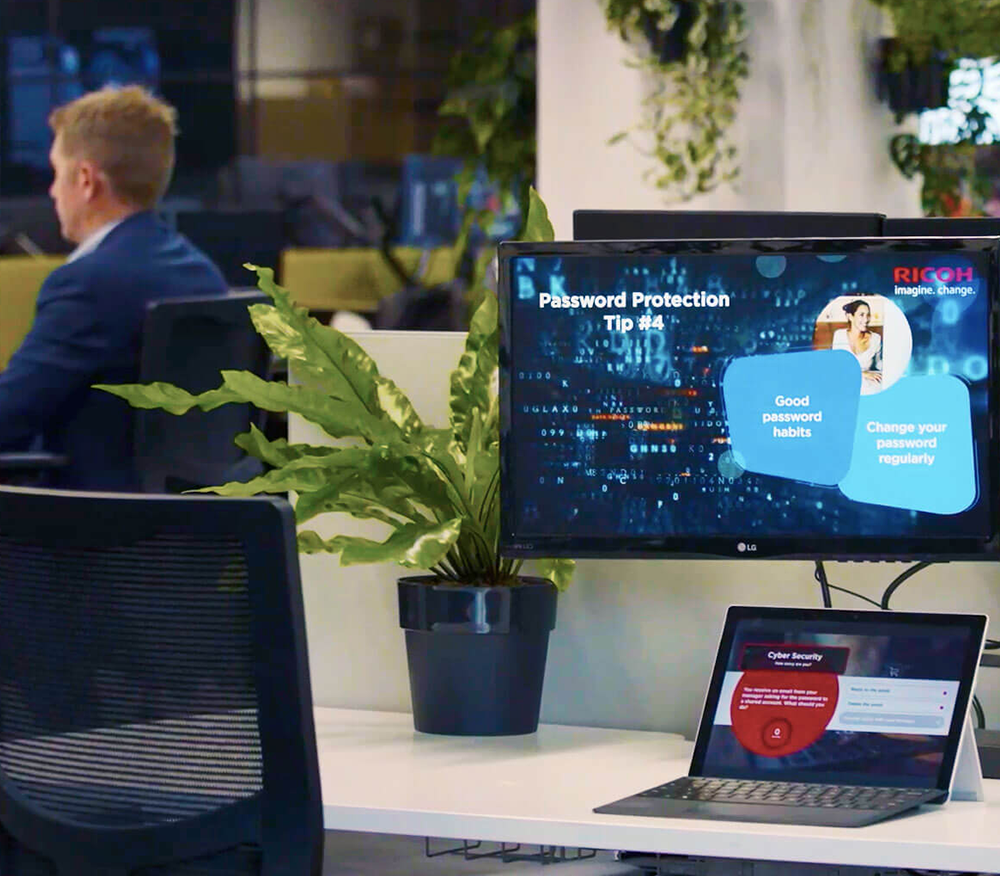
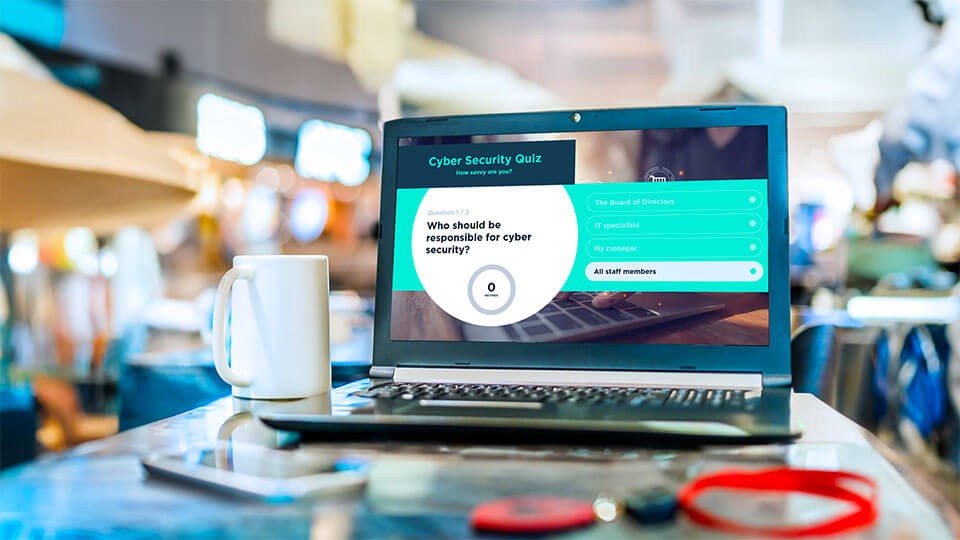
Topics such as cyber security hygiene in banking, patient privacy in hospitals, respectful workplace conduct, or fraud awareness in credit unions require ongoing visibility. These are not one-off learning moments. They are habits.
This is where screensavers for internal communications start to deliver real, measurable impact.
Your LMS introduces the policy.
Your employee screensaver reinforces the behaviour daily.
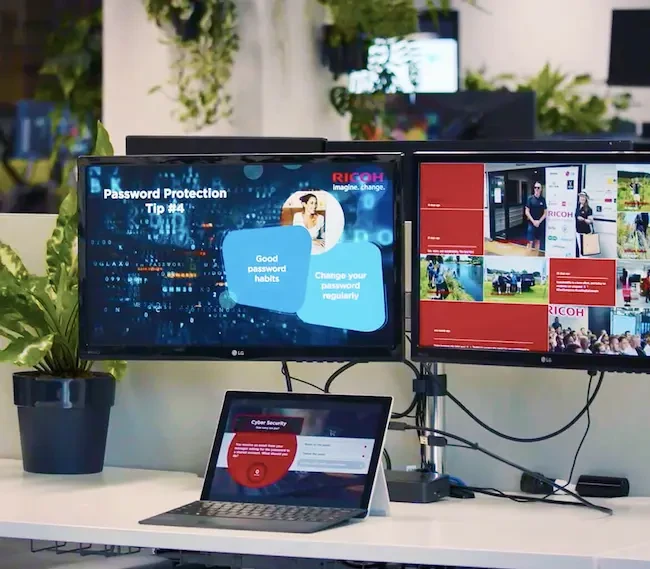
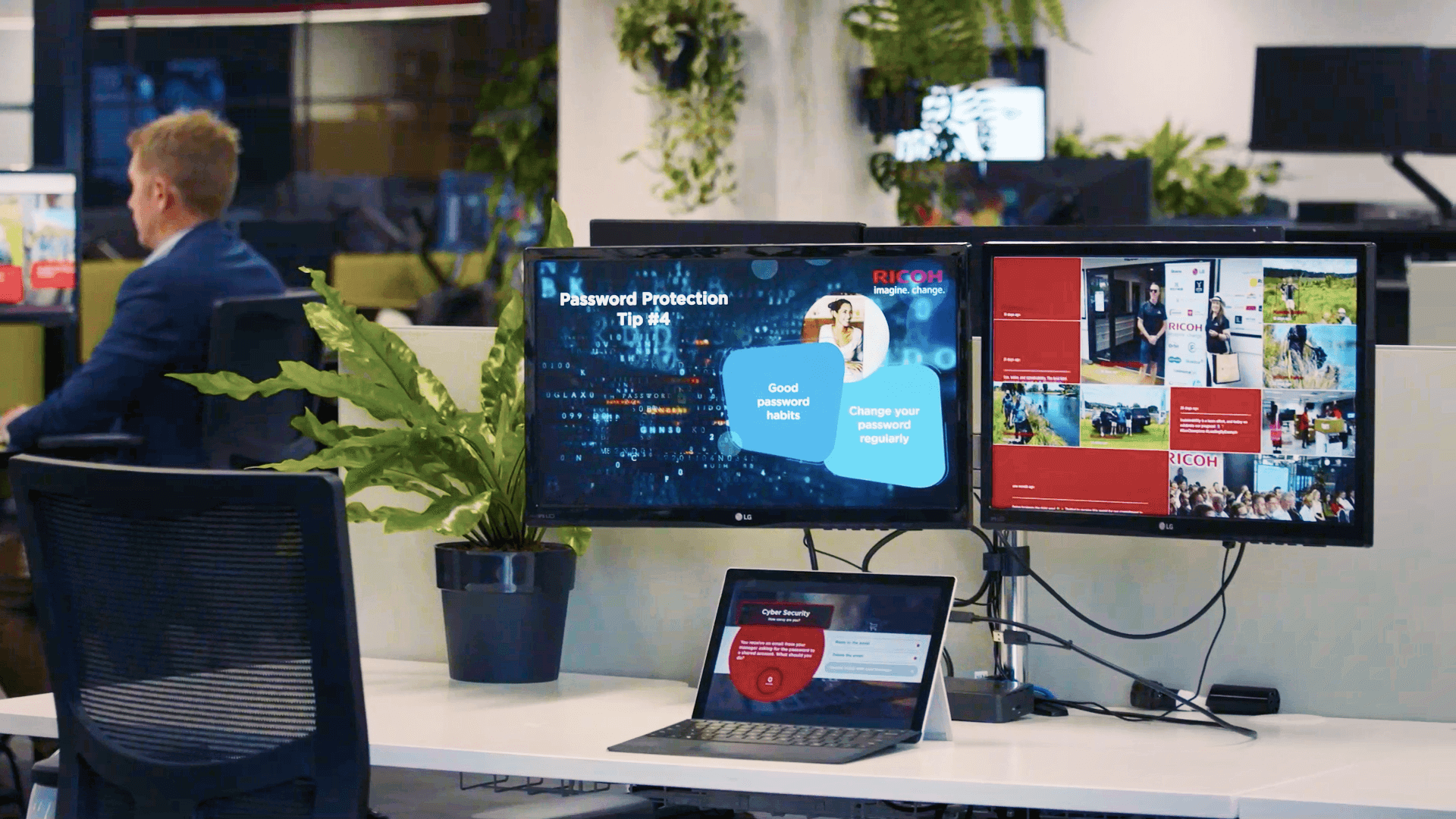
A rotating playlist might reinforce phishing red flags during Cyber Security Month. It may remind hospital and aged care workers about incident reporting pathways. It may reinforce respectful workplace behaviours after formal training concludes.
Tiny nudges. Daily visibility. Lasting change.
That’s how habits are built, not announced.
Reaching Every Workforce Segment
One of the greatest strengths of an enterprise screensaver strategy is inclusivity.
Frontline workers. Hybrid employees. Corporate teams. Contractors. Regional branches. Shared offices. Break rooms.

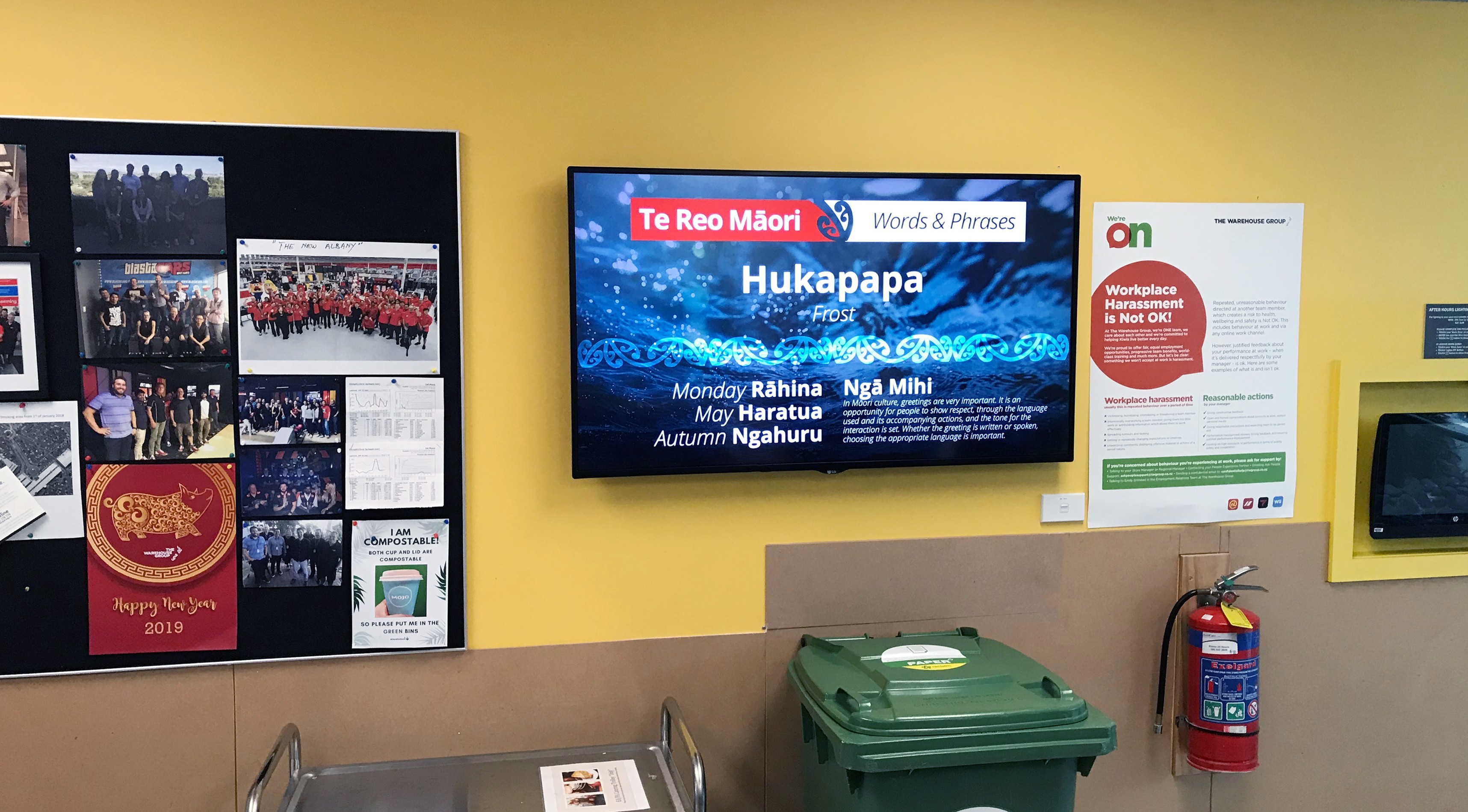
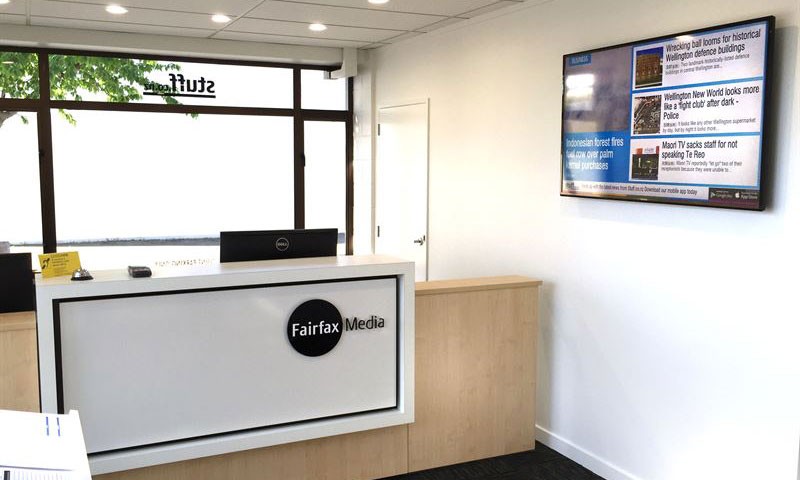
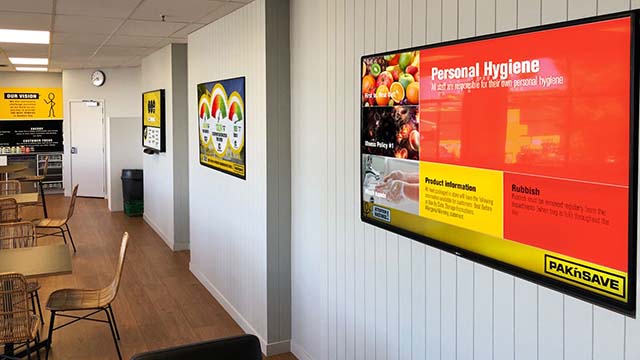
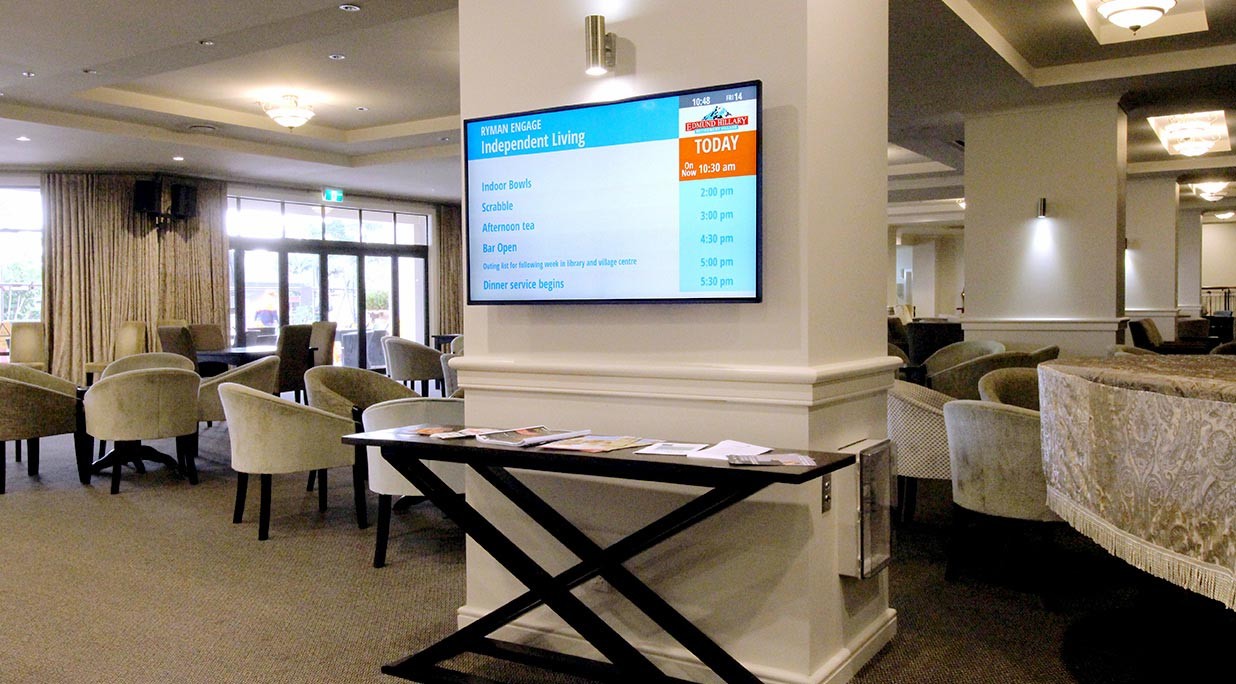
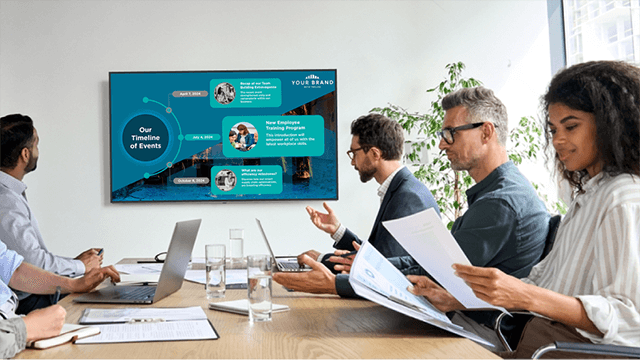
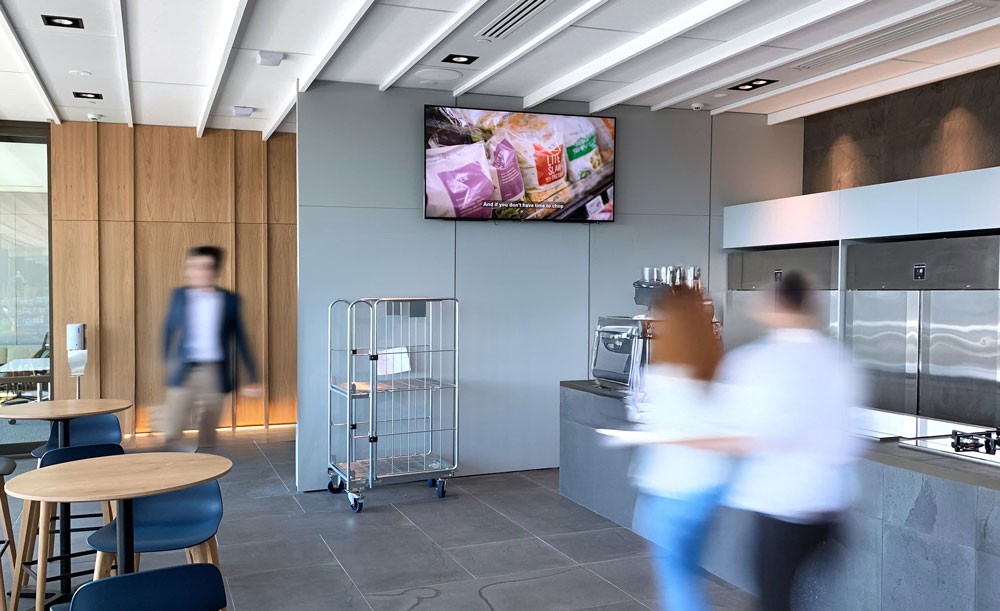
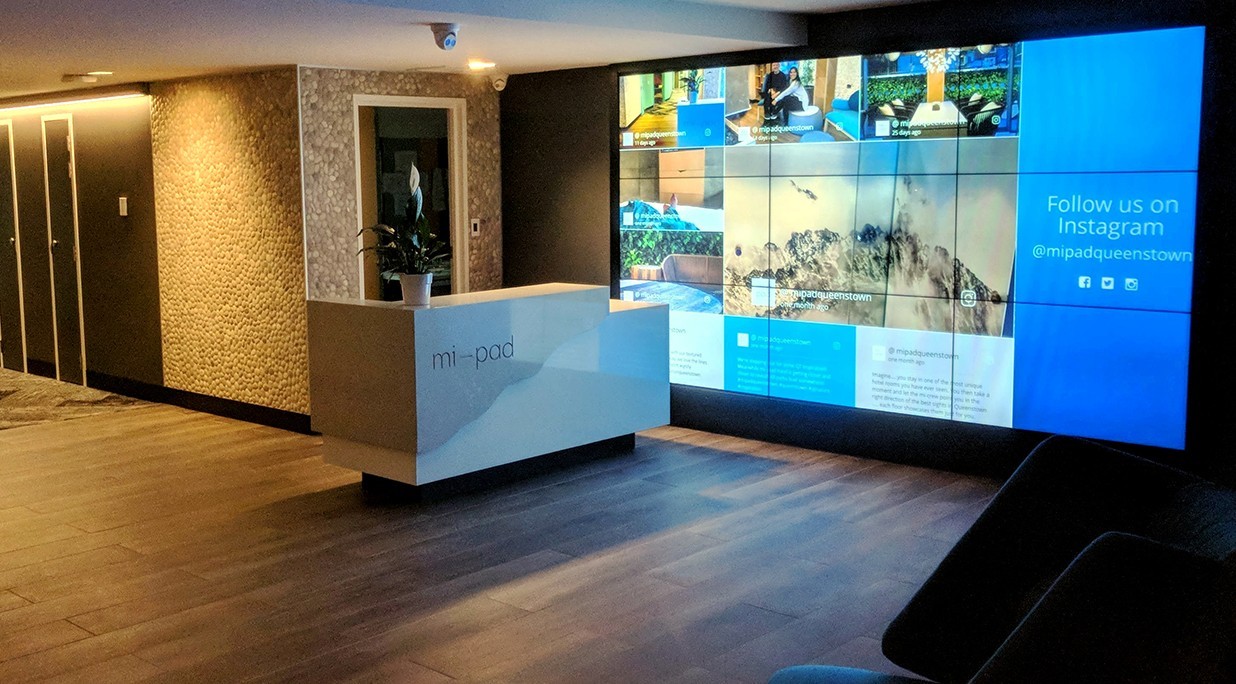
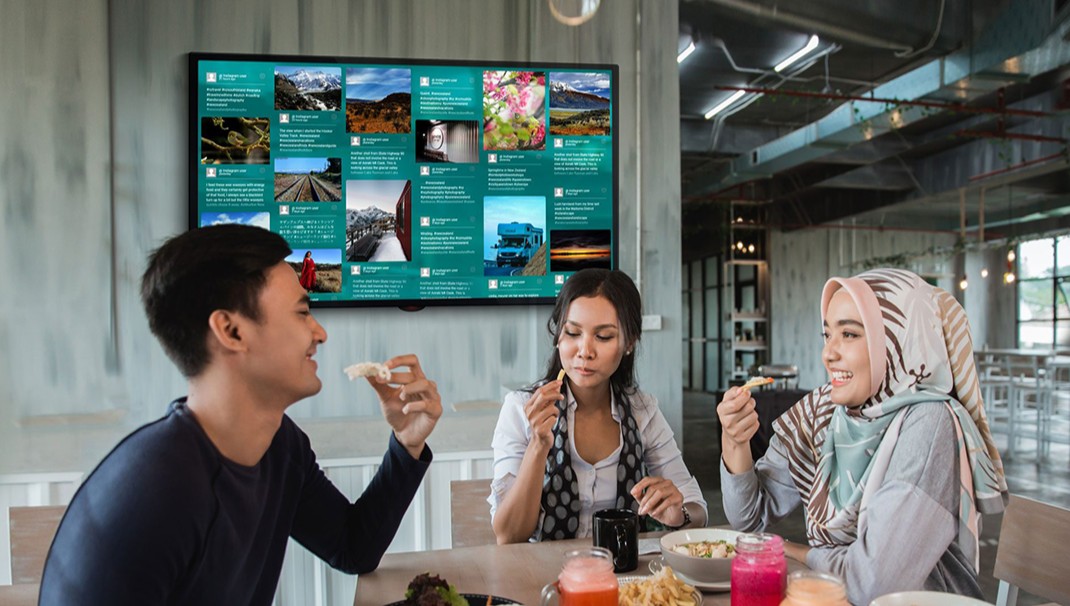
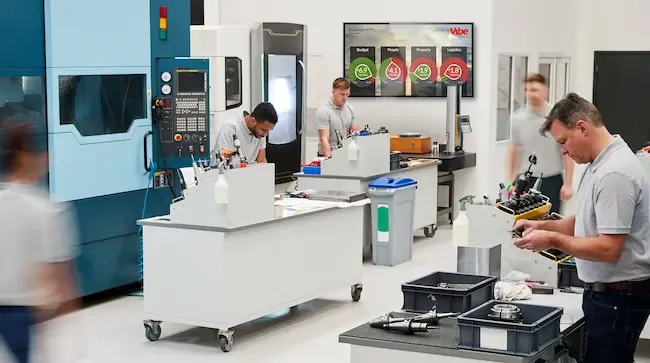
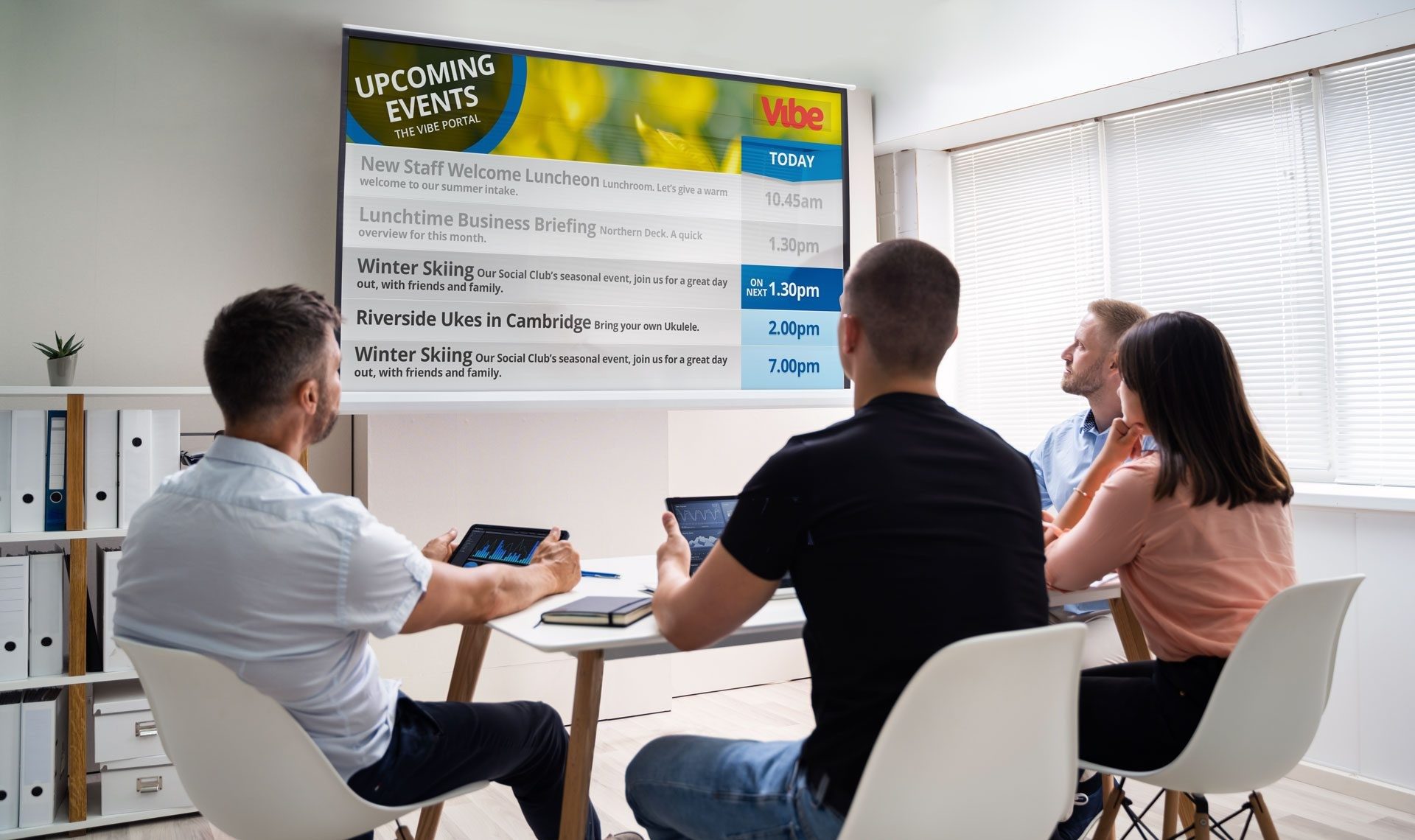
By extending messaging across desktop screensavers, lock screens, digital signage, and meeting room displays, enterprises create a connected communication ecosystem. Screensavers support dynamic playlists during idle time. Lock screens provide pre-login reminders. Digital signage amplifies messages in communal spaces.
Transgrid combined desktop deployment with 40 digital signage displays. The NHS leveraged screensavers in clinical and administrative settings. In both cases, the result was the same: improved reach across previously disconnected groups.
An employee screensaver does not replace existing channels. It strengthens them by ensuring critical themes remain visible.
Making Every Screensaver Message Count
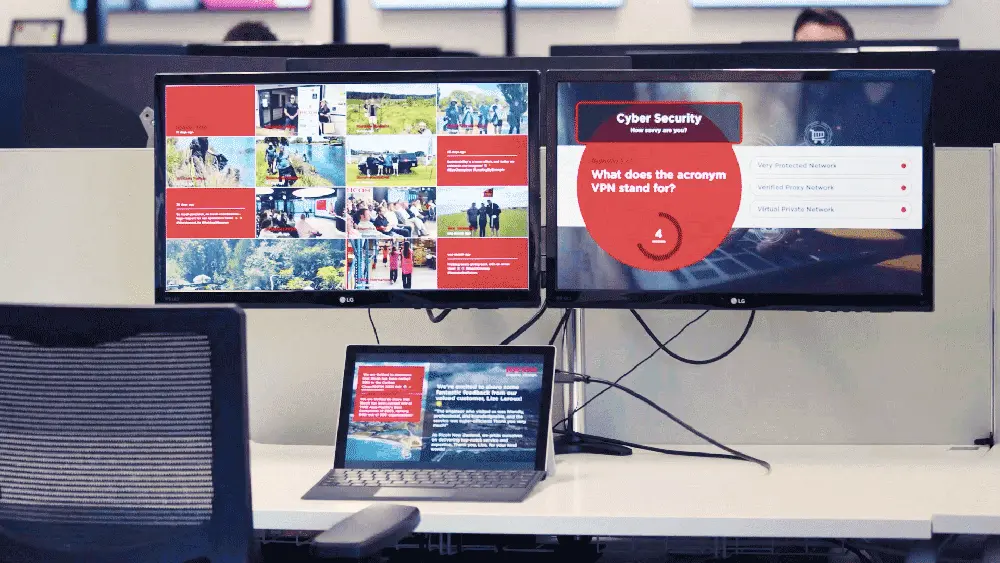
To maximise impact, daily messaging must remain fresh and relevant.
Effective screensaver staff announcements follow a few principles:
- Keep content concise and visually engaging
- Focus on one key message per slide
- Rotate intelligently to avoid message fatigue
- Target by department or location where possible
- Balance time-sensitive announcements with long-term behavioural themes
This is where snackable learning becomes strategic rather than cosmetic. The goal is not simply to display content, but to build memory through consistent, spaced exposure.
The Strategic Advantage
The modern workplace does not need more communication. It needs better surfaces.
An enterprise employee screensaver turns a previously idle asset into a daily messaging engine. It ensures that what matters most remains visible, repeated, and remembered.
For healthcare systems like the NHS, it reinforces safety and wellbeing across complex environments. For infrastructure organisations like Transgrid, it reconnects dispersed teams and restores message visibility. For banks and credit unions, it embeds cyber awareness and compliance into everyday routines.
Everyday screens. Daily exposure. Lasting impact.
In an era of digital overload, the most powerful internal communication channel may already be sitting quietly on every desk.

About the Author

Vaughan Reed has over 20 years of experience in the digital communication space, driven by a core belief that effective communication is mission-critical for organisational success. As Founder and CVO of Vibe.fyi, he helps communication teams connect with hard-to-reach, hybrid, and deskless employees through vibrant, visual content that's seen often and a part of the daily rhythm at work. Vibe's purpose-built SaaS platform delivers compliance, wellbeing, safety, and culture-building messages across everyday digital touchpoints, from communal screens to desktop and browser displays, transforming workplace communication for the modern era.












-min.jpg)
-min.jpg)


















![64 Social Media Holidays for Your Internal Comms Content Calendar [NZ]](/media/website_posts/185/calendar-background.jpg)



![[UK] 8 ways to help your employees through the cost-of-living crisis that doesn’t involve a pay raise](/media/website_posts/179/personal-finances.jpg)





![[2022] 9 proven ways to influence employee engagement within the manufacturing sector](/media/website_posts/160/Mockup-Manufacturing-03-LTI.jpg)